

Zinc Ricinoleate Powder: A Versatile Functional Ingredient
Chemical Characteristics and Physical Properties

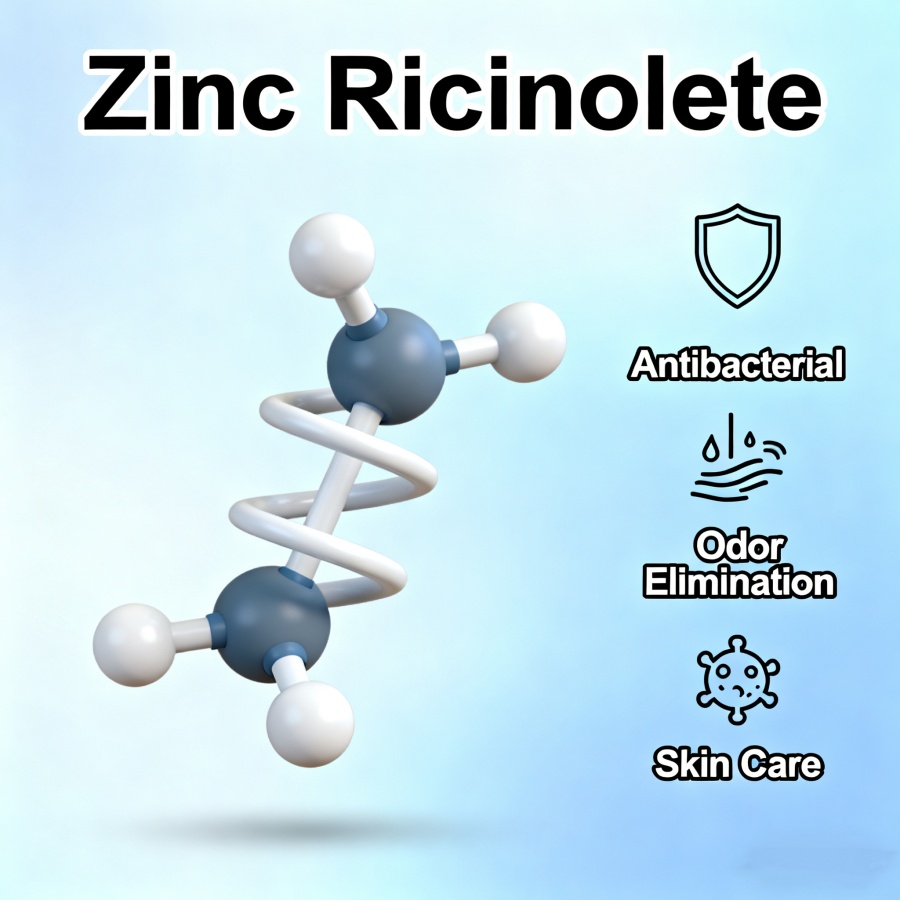
Chemically, zinc ricinoleate is represented by the molecular formula C₃₄H₆₄O₄Zn, with a molecular weight of approximately 611.2 g/mol. Its chemical structure consists of two ricinoleate anions (each featuring a hydroxyl group at the 12th carbon and a carboxylate group at the terminal) chelated to a central zinc cation. This structure endows the compound with a unique balance of lipophilic and hydrophilic properties, making it highly compatible with both oil-based and water-based formulations.
In its powdered form, zinc ricinoleate typically appears as a fine, off-white to pale yellow powder with a faint, characteristic odor. It exhibits excellent thermal stability, maintaining its structure and functionality at temperatures up to 120°C, which is critical for processing in high-temperature manufacturing processes. The powder is insoluble in water but soluble in organic solvents such as Ethanol, ethyl acetate, and mineral oils. Its melting point ranges from 90°C to 98°C, and it has a bulk density of 0.4-0.6 g/cm³, facilitating easy handling and formulation.
A key chemical property of zinc ricinoleate is its ability to form complexes with volatile organic compounds (VOCs), particularly those responsible for unpleasant odors. This chelating capacity stems from the interaction between the zinc cation and the polar functional groups of odor-causing molecules, such as amines and thiols, which are common in sweat and bacterial metabolites. Additionally, the hydroxyl groups in the ricinoleate chain enhance its adhesion to surfaces, including skin and hair, prolonging its functional effects.
Key Applications
Zinc ricinoleate powder’s unique combination of properties makes it a versatile ingredient in various industries. Its most prominent applications are in personal care and cosmetics, but it also finds use in pharmaceuticals, industrial lubricants, and agriculture.
- Personal Care and Cosmetics
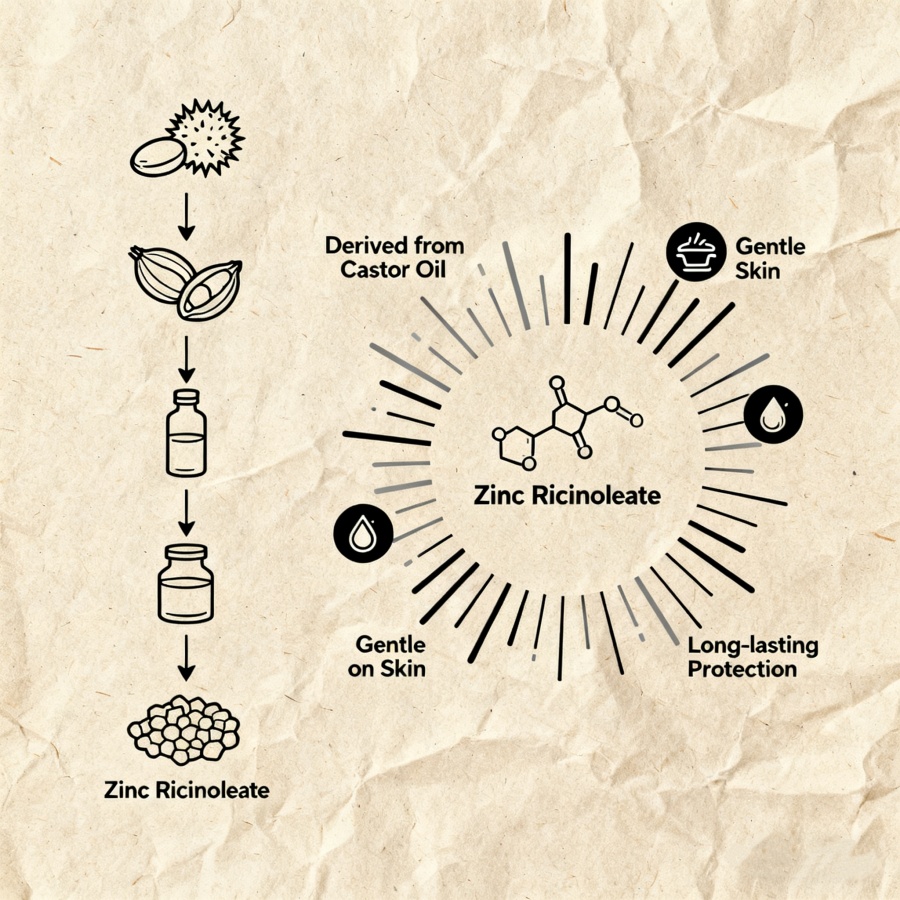
The personal care industry is the largest consumer of zinc ricinoleate powder, primarily due to its exceptional odor-neutralizing and skin-conditioning properties. In deodorants and antiperspirants, it acts as a key active ingredient by chelating the volatile amines and thiols produced by bacteria on the skin, effectively eliminating body odor without blocking sweat glands (a common concern with aluminum-based antiperspirants). Unlike fragrance-based deodorants, which merely mask odors, zinc ricinoleate addresses the root cause, providing long-lasting protection.
In skincare products such as lotions, creams, and lip balms,zinc ricinoleatefunctions as an emollient and moisturizer. The hydroxyl groups in its structure form hydrogen bonds with water molecules, helping to retain moisture in the skin. It also enhances the texture and spreadability of formulations, reducing greasiness and improving skin feel. Additionally, its anti-inflammatory properties make it suitable for Sensitive Skin products, as it can soothe irritation and redness.
In hair care products, such as shampoos and conditioners, zinc ricinoleate helps to control dandruff by inhibiting the growth of Malassezia fungi, which are associated with dandruff formation. It also acts as a conditioning agent, improving hair softness and manageability by coating the hair shaft and reducing friction.
- Pharmaceuticals
Zinc ricinoleate powder has several pharmaceutical applications, leveraging its antimicrobial, anti-inflammatory, and skin-penetrating properties. In topical formulations for treating skin conditions such as eczema, psoriasis, and acne, it acts as a soothing agent and enhances the penetration of other active ingredients, such as corticosteroids or antibiotics. Its antimicrobial activity against bacteria and fungi also makes it useful in antifungal creams and wound care products, where it helps prevent infection and promote healing.
In oral care products, such as toothpaste and mouthwash, zinc ricinoleate helps to reduce bad breath by neutralizing volatile sulfur compounds (VSCs) produced by oral bacteria. It also exhibits mild antibacterial activity against oral pathogens, contributing to overall oral hygiene. Additionally, its compatibility with other oral care ingredients, such as fluoride and abrasives, makes it a suitable additive.
- Industrial Applications
In industrial lubricants, zinc ricinoleate powder is used as an additive to improve lubricity and reduce wear. Its polar structure allows it to adhere to metal surfaces, forming a protective film that minimizes friction between moving parts. It is particularly effective in high-temperature lubricants due to its thermal stability, making it suitable for use in automotive engines and industrial machinery.
In the paint and coating industry, zinc ricinoleate acts as a drier, accelerating the curing process of oil-based paints. It promotes the oxidation and polymerization of the paint film, reducing drying time and improving durability. Its compatibility with various resins and pigments also makes it a versatile additive in different paint formulations.
- Agriculture
Emerging applications of zinc ricinoleate powder in agriculture include its use as a biopesticide and plant growth regulator. Its antimicrobial properties help to control fungal and bacterial diseases in crops, such as powdery mildew and bacterial blight. Additionally, it can enhance nutrient uptake in plants by improving the permeability of root cell membranes, promoting growth and increasing crop yield. Unlike synthetic pesticides, zinc ricinoleate is biodegradable and non-toxic to beneficial insects, making it an environmentally friendly alternative.
Safety Profiles and Regulatory Compliance
Zinc ricinoleate powder is generally recognized as safe (GRAS) for use in personal care and food contact applications by regulatory bodies worldwide, including the U.S. Food and Drug Administration (FDA) and the European Union’s Scientific Committee on Consumer Safety (SCCS). Extensive toxicological studies have demonstrated its low acute toxicity, with no adverse effects observed in oral, dermal, or inhalation toxicity tests at typical application doses.
In dermal safety studies, zinc ricinoleate showed no evidence of irritation or sensitization in human patch tests, even at concentrations up to 20%. This makes it suitable for use in products for sensitive skin, including baby care products. However, like all zinc compounds, excessive ingestion may cause gastrointestinal discomfort, but this is not a concern in typical applications where the compound is used topically or in small quantities.
Regulatory compliance varies slightly by region. In the European Union, zinc ricinoleate is listed in Annex VI of the Cosmetics Regulation (EC) No 1223/2009, allowing its use in cosmetics without restrictions. In the United States, it is included in the FDA’s list of approved cosmetic ingredients. For pharmaceutical applications, it must comply with the pharmacopoeial standards of the respective region, such as the United States Pharmacopeia (USP) or the European Pharmacopoeia (Ph. Eur.).
Future Development Prospects
The demand for zinc ricinoleate powder is expected to grow steadily in the coming years, driven by several key trends. The increasing consumer preference for natural and sustainable ingredients in personal care products has led to a shift away from synthetic odor neutralizers and preservatives, positioning zinc ricinoleate (derived from renewable castor oil) as an attractive alternative. Additionally, the growing awareness of the potential health risks associated with aluminum-based antiperspirants has boosted the demand for aluminum-free deodorants, where zinc ricinoleate is a key active ingredient.
Advancements in synthesis technology are also expected to drive growth. Research is focused on developing more efficient and environmentally friendly production methods, such as enzymatic hydrolysis and continuous flow reactors, which can reduce production costs and minimize waste. Additionally, efforts to improve the purity and particle size of the powder are ongoing, enabling its use in high-performance applications such as advanced pharmaceuticals and nanotechnology-based products.
Emerging applications in the medical and agricultural sectors also present significant growth opportunities. In medicine, research is exploring the use of zinc ricinoleate in drug delivery systems, where its skin-penetrating properties can enhance the efficacy of topical medications. In agriculture, its potential as a biopesticide aligns with the global trend toward sustainable agriculture and reduced reliance on synthetic chemicals.
However, the industry also faces challenges, including fluctuations in the price of castor oil (a key raw material) and the need for further research to fully understand its long-term environmental impact. Despite these challenges, the unique properties and diverse applications of zinc ricinoleate powder position it as a high-potential ingredient in multiple industries.
Conclusion
Zinc ricinoleate powder is a versatile functional ingredient that combines the properties of zinc and ricinoleic acid to deliver odor neutralization, skin conditioning, antimicrobial, and lubricating functionalities. Its production from renewable castor oil makes it a sustainable choice, aligning with global trends toward natural and eco-friendly products. From personal care to pharmaceuticals and industrial manufacturing, its diverse applications highlight its importance across multiple sectors.
As research and development continue to advance, the potential of zinc ricinoleate powder is expected to expand further. Improvements in production technology, coupled with the discovery of new applications, will drive its growth in the coming years. With its favorable safety profile and regulatory compliance, zinc ricinoleate powder is set to remain a key ingredient in the development of innovative and sustainable products across industries.